

How to Ease Your Knee Pain and Prevent Injuries
The knee is the most commonly injured joint and this is especially true in sports. But, unless there’s been an injury directly to the knee, like a torn ACL caused by impact or an accident, it’s unusual that a knee problem originates in the knee.
The knee is the most commonly injured joint and this is especially true in sports. But, unless there’s been an injury directly to the knee, for example, like a torn ACL caused by impact or an accident, it’s unusual that a knee problem originates in the knee.
The way a person moves or doesn’t move can strain their knee. Problems with overall movement organization can leave them unable to deal with an urgent situation—like what happens in sports or a sudden loss of balance.
With people who have knee problems frequently, it’s helpful to trace the history that led up to their injury. Two things are taken into consideration: the circumstances and how a person is organized. By this I mean, whether a person natually stands with more weight on one leg than the other, leans to one side, or whether their pelvis is slightly tilted, etc.
Often, when a person comes to me, I can see if they’re putting more weight on one leg. And from their history, and observing their spine, ribcage, hips, lower legs, and feet, I can get a sense of what has led to them being more vulnerable to the kind of injury they experienced.
Here’s an example of how this might play out:
Let’s say a person favors one leg because of a past injury that happened many years ago. Compensation patterns have now set in and feel “normal.” But if one leg is the stable one, and less weight is on the leg with the past injury, then if something happens where the person has to respond quickly, like if a little child runs into them, the person has less options to respond.
Ideally, the person would be able to move equally easily in all directions: to the left, right, forward and backwards. But if one leg is less stable, then the person has less options and if the child hits them from the wrong side, the person will lose his balance and possibly twist or strain one knee.
During the first 72 hours, I recommend reducing the swelling with ice, resting, elevating and compressing the injured knee. (Of course, seek the advice of your health care professional if you think you might be seriously hurt.)
After the first 2-three weeks after the injury, Feldenkrais can be used to help recover from the injury and help imrove a person’s overall functioning so that they have more balanced distribution of weight and can prevent another injury.
In Feldenkrais we work with a person’s entire body.
You aren’t a bunch of parts and pieces! There is a connection between every part of you. If someone is recovering from or has had a knee injury (or any injury for that matter), we would bring their head, neck, spine, hip joints and feet into the picture as well.
You want to have knees that can respond to whatever movement you need or want to make. Your knees should be ready for action. Ideally your knees can move freely easily in all directions — sideways, forward, and backwards. As you age, it’s common to lose the abilty to move freely, and Feldenkrais can restore that freedom and ease of movement and function.
To schedule a session, either virtual or in-person, click here.

Tried and True Steps to Heal Ankle Pain and Knee Pain: Weeks After
A couple of weeks after spraining or straining an ankle or knee, it’s likely you’ll begin to feel a little better. At this point, you might be tempted to resume your regular activities. But here’s some advice to consider when moving forward.
A couple of weeks after spraining or straining an ankle or knee, it’s likely you’ll begin to feel a little better. At this point, you might be tempted to resume your regular activities. But here’s some advice to consider when moving forward.
1. Give your body time to heal.
Take a rest from any activities where you notice even the slightest pain. In this case, pain is not good — not even a little bit. You may need a few more days or even a couple of weeks to allow your tissue to heal. Your body knows how to heal and it’s in your best interest to provide a healing environment.
2. Listen to your body.
Your body communicates to you through pain. Pain is your body’s way of telling you to STOP what you’re doing. Ignoring pain or pushing through pain will only delay your healing. So take a rest!
3. Trust your body.
Your body has the innate wisdom to always move towards healing. It can be depressing when we think we’re missing out of activities or we feel afraid that this injury will never heal. But your brain is always working on your behalf and knows what to do. Take a break from exercise and other activities, get plenty of rest, eat healthy food, hydrate, and watch some funny videos.
Really take this time to heal and you’ll find yourself back on your feet
4. Re-enter gradually.
When your injured body part is feeling better, re-enter into your normal activities gradually. Don’t expect to jump back in at the same level you were before the injury. Go slowly, observe whether you feel pain, and if so, back off a bit. Plan to ice your recovering body part after using it for several weeks to help reduce any inflammation.
5. Supportive footwear.
If you’re recovering from an injured knee or ankle, wear supportive shoes. This will help distribute your weight and take additional stress off your knee or ankle.
Once you’re back on your feet, you may want to consider working 1:1 with a Feldenkrais practitioner to make sure you eliminate any muscular compensation patterns that happen when we’ve had to immobilize parts of our body for a period of time. Read more about compensation patterns and what to watch out for here.
Tried and True Steps to Heal Ankle Pain and Knee Pain: The First 72 Hours
The first 72 hours after an injury like a strain or sprain are critical for healing. Here’s a simple guide to ensure you’re doing all the things during that time frame following the incident.
The first 72 hours after an injury like a strain or sprain are crititcal for healing. Here’s a simple guide to ensure you’re doing all the things during that time frame following the incident.
First of all, it’s always a good idea to get checked out by your health care provider to make sure no serious damage has occurred. If you have extreme pain or you think you may have broken a bone or torn something, see a doctor immediately!
But if you’re pretty sure it’s a sprain or strain, then follow these suggestions:
R = Rest
As soon as you’re hurt, stop your activity, and rest as much as possible for the first 2 days. The old “no pain, no gain” philosophy doesn’t work here. Pushing through the pain with certain injuries, like a moderate to severe ankle or knee sprain, can make the damage worse and delay your recovery. Doctors say you should avoid putting weight on the injured area for 24 to 48 hours. Resting also helps prevent further bruising.
I = Ice the area immediately!
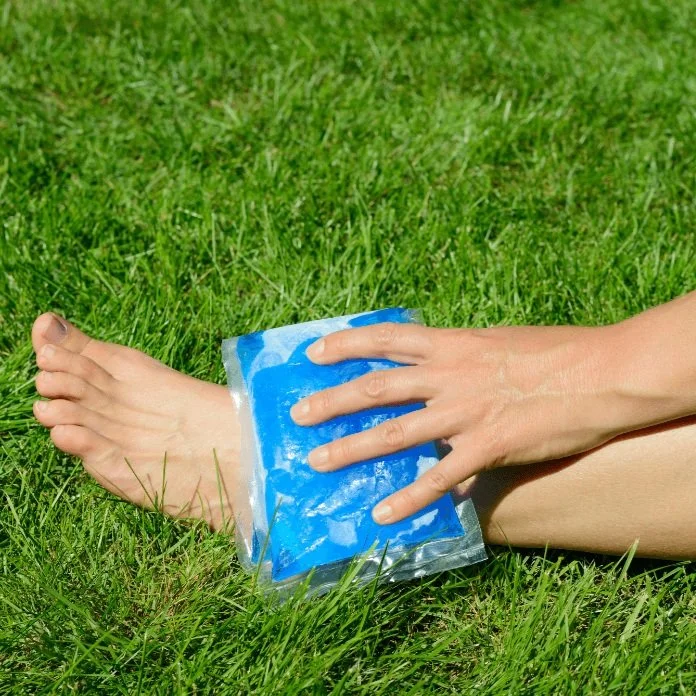
I recommend crushed ice vs. a cold pack because you can cover more surface area and the cold lasts longer. Cover the injured area with ice in a bag for 20 minutes each hour.
After the first 24 hours, you can alternate between ice and heat, if you like. Ice reduces the swelling and helps with pain. Heat brings circulation to the area and sometimes feels good.
C = Compression
Wrap an ACE bandage around the injured area to compress it. Compression wrapping reduces the swelling and keeps blood moving more efficiently in the injured area. An ACE bandage is also helpful because it creates a layer of fabric between the ice and your skin, still making the ice effective.
E = Elevate
Elevate your injured body part heart-level or above if possible. You have have your leg on a chair if you’re sitting at work. Elevating an injured body part helps blood and fluid flow away from the injured area. This is helpful because it can help reduce swelling. Reducing your swelling can also decrease the inflammation and pain of your injury.