

Tried and True Steps to Heal Ankle Pain and Knee Pain: Weeks After
A couple of weeks after spraining or straining an ankle or knee, it’s likely you’ll begin to feel a little better. At this point, you might be tempted to resume your regular activities. But here’s some advice to consider when moving forward.
A couple of weeks after spraining or straining an ankle or knee, it’s likely you’ll begin to feel a little better. At this point, you might be tempted to resume your regular activities. But here’s some advice to consider when moving forward.
1. Give your body time to heal.
Take a rest from any activities where you notice even the slightest pain. In this case, pain is not good — not even a little bit. You may need a few more days or even a couple of weeks to allow your tissue to heal. Your body knows how to heal and it’s in your best interest to provide a healing environment.
2. Listen to your body.
Your body communicates to you through pain. Pain is your body’s way of telling you to STOP what you’re doing. Ignoring pain or pushing through pain will only delay your healing. So take a rest!
3. Trust your body.
Your body has the innate wisdom to always move towards healing. It can be depressing when we think we’re missing out of activities or we feel afraid that this injury will never heal. But your brain is always working on your behalf and knows what to do. Take a break from exercise and other activities, get plenty of rest, eat healthy food, hydrate, and watch some funny videos.
Really take this time to heal and you’ll find yourself back on your feet
4. Re-enter gradually.
When your injured body part is feeling better, re-enter into your normal activities gradually. Don’t expect to jump back in at the same level you were before the injury. Go slowly, observe whether you feel pain, and if so, back off a bit. Plan to ice your recovering body part after using it for several weeks to help reduce any inflammation.
5. Supportive footwear.
If you’re recovering from an injured knee or ankle, wear supportive shoes. This will help distribute your weight and take additional stress off your knee or ankle.
Once you’re back on your feet, you may want to consider working 1:1 with a Feldenkrais practitioner to make sure you eliminate any muscular compensation patterns that happen when we’ve had to immobilize parts of our body for a period of time. Read more about compensation patterns and what to watch out for here.
Tried and True Steps to Heal Ankle Pain and Knee Pain: The First 72 Hours
The first 72 hours after an injury like a strain or sprain are critical for healing. Here’s a simple guide to ensure you’re doing all the things during that time frame following the incident.
The first 72 hours after an injury like a strain or sprain are crititcal for healing. Here’s a simple guide to ensure you’re doing all the things during that time frame following the incident.
First of all, it’s always a good idea to get checked out by your health care provider to make sure no serious damage has occurred. If you have extreme pain or you think you may have broken a bone or torn something, see a doctor immediately!
But if you’re pretty sure it’s a sprain or strain, then follow these suggestions:
R = Rest
As soon as you’re hurt, stop your activity, and rest as much as possible for the first 2 days. The old “no pain, no gain” philosophy doesn’t work here. Pushing through the pain with certain injuries, like a moderate to severe ankle or knee sprain, can make the damage worse and delay your recovery. Doctors say you should avoid putting weight on the injured area for 24 to 48 hours. Resting also helps prevent further bruising.
I = Ice the area immediately!
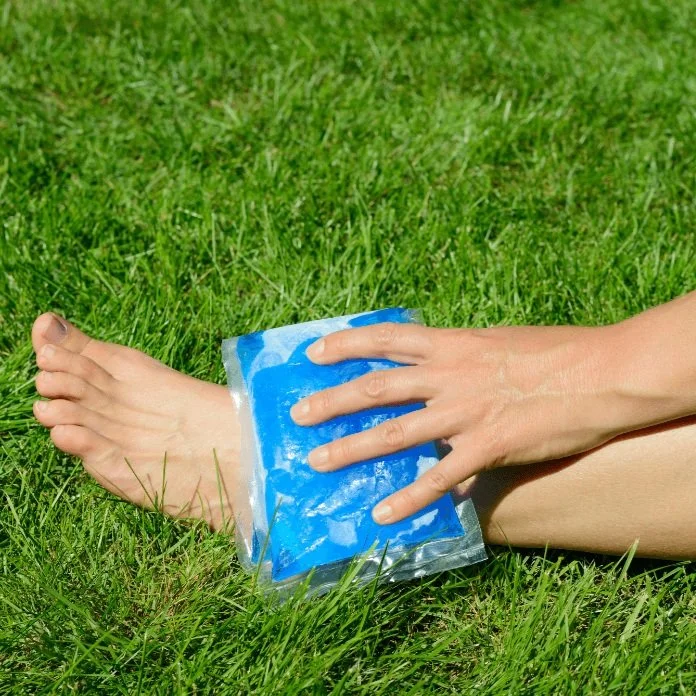
I recommend crushed ice vs. a cold pack because you can cover more surface area and the cold lasts longer. Cover the injured area with ice in a bag for 20 minutes each hour.
After the first 24 hours, you can alternate between ice and heat, if you like. Ice reduces the swelling and helps with pain. Heat brings circulation to the area and sometimes feels good.
C = Compression
Wrap an ACE bandage around the injured area to compress it. Compression wrapping reduces the swelling and keeps blood moving more efficiently in the injured area. An ACE bandage is also helpful because it creates a layer of fabric between the ice and your skin, still making the ice effective.
E = Elevate
Elevate your injured body part heart-level or above if possible. You have have your leg on a chair if you’re sitting at work. Elevating an injured body part helps blood and fluid flow away from the injured area. This is helpful because it can help reduce swelling. Reducing your swelling can also decrease the inflammation and pain of your injury.